Archive for the ‘Concepts’ Category

8 Improvisation Improvement Projects That Will Change Your Playing

Thursday, May 2nd, 2013

Practice is an essential part of your journey as a musician. We all do it everyday…or at least we try our best to, however daily practice doesn’t always guarantee improvement.

Why?? Simply because not all practice is created equal. If you look at the big picture there are two basic types of practice:

  • (1) maintenance practice in which you are doing the necessary work to maintain your current level and…
  • (2) improvement practice in which you are breaking new ground, isolating problem areas in your playing and working on skills that you have not yet developed.

Both types of practice are necessary for performing at your peak. There is a certain amount of instrumental maintenance to perform each day to ensure that you are staying at your current level of musicianship and there is also a need to acquire new information and skills if you wish to improve as a player.

However, the barrier that most musicians encounter when striving for improvement is that they get stuck on maintenance practice. Day after day they spend hours practicing what they already know: the same exercises, the same lines, the same patterns, the same tunes.

Hours are being logged in the practice room, but the time is not being spent on the type of practice that will elevate your skills to the next level. Left unchanged, this process can go on for years where you’re just maintaining the musical level that you’ve already achieved, not learning anything new.… Read More

6 Common Chord Relationships (…other than ii-V-I)

Wednesday, April 10th, 2013

A common question that many improvisers often have is “How do I connect chords when I’m soloing?”

Improvising over one chord is simple enough, however when you begin to play tunes with actual chord progressions, creating and connecting lines becomes a bit more challenging. This musical obstacle goes to the heart of the skills you need as an improviser and the solution, like many obstacles we encounter in music, is simple in theory yet significantly more involved in implementation.

Imagine for a moment that you took away all the theory terminology, the voice leading rules, the maze of scales and the chord symbol jargon that you normally encounter as an improviser. What would you be left with? You’d be left with sound – that’s it! Despite everything that our brains get caught up in as we try to create a solo, the harmonic aspect of improvisation boils down to sound: Individual sounds (chords) and the relationships between these sounds.

As an improviser a theoretical understanding and technical proficiency are the first steps when approaching these harmonic relationships, but your ultimate goal is melody. Can you create a seamless melody over these sounds and subsequent chord progressions? Herein lies the creative challenge that improvisation poses to us every time we attempt to play a tune.

Your ability to play melodies over a chord progression is directly related to how well you can hear the individual chords of a progression and the relationships between them. If you want to play effortlessly … Read More

Thinking About Musical Phrasing for Improvisation

Monday, January 21st, 2013

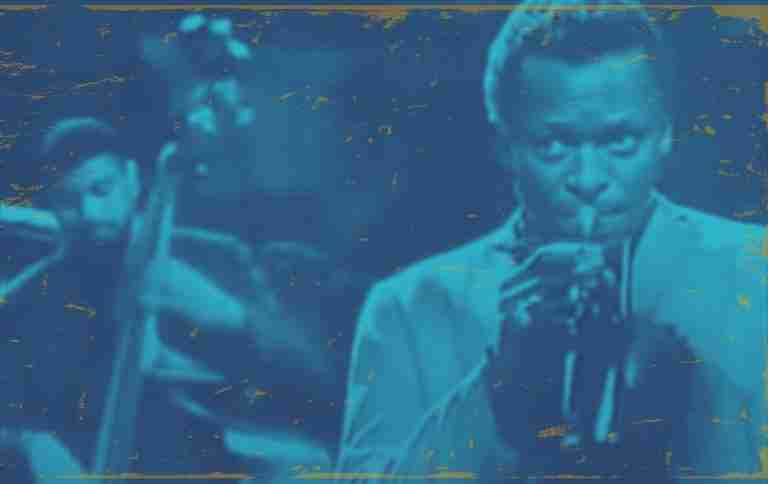
Recently I’ve been studying and transcribing a lot of Miles from around 1956-1957. Albums like Cookin’, Relaxin’, and Workin’.

More than the notes or the harmonic devices in his solos, the one thing that sticks out about Miles is his sense of phrasing. This is what sets him apart and why so many listeners connect with his sound. Miles could play anything he wanted, but he always plays musically.

It takes an advanced and honest musician to improvise a melody that they are hearing in their heads amid the wash of constantly moving chords and time. And it takes an even more mature musician to not play all the scales, and patterns and language that they’ve practiced for hours.

Most people don’t realize how much it work and focus it takes to get to the point that you can free yourself from the theory and play something that you’re hearing and feeling.

This idea of phrasing and creating meaningful musical statements is one aspect of improvising that is missing from a lot of players’ solos. Improvising is not just using scales or inserting a pattern into a chord progression, in the end it’s all about creating music and performing personal melodies.

What is a musical phrase?

When you improvise a musical phrase, you essentially become a composer, creating new melodies on the spot over an established chord progression. Therefore, studying or at the very least becoming familiar with the elements of composition is essential for creating … Read More

6 Reasons You Should Start Composing Today

Wednesday, October 24th, 2012

I can’t understand why people are frightened of new ideas. I’m frightened of the old ones.~John Cage

At some point as an improviser, whether you welcome it with open arms or avoid it like the plague, you’re going to be faced with the chance to compose. That’s right – you, alone in a practice room writing your own music.

You may be excited to explore this creative opportunity or maybe the idea of staring at a blank sheet of staff paper immediately induces fear and doubt. Whatever your initial reaction, the opportunity to compose your own music will always there and if you truly want to move forward musically, there are a number of practical reasons that you should give composition a try.

You may want to perform some of your own music for once, rather than another long set spent rehashing worn out standards. You might have an assignment for one of your classes or a request for an upcoming gig. Or maybe for some strange reason you have this melodic fragment that keeps ringing in your ears everywhere you go.

We all have different musical backgrounds. Up to this point you might’ve tried your hand at a few originals or maybe you’ve sketched out a simple chord progression and left it at that.

However, if you’re like a lot of improvisers, composing music remains this elusive task that you keep meaning to do, but never seem to get around to actually starting or finishing – and this … Read More

Your Next Musical Milestone: Chromatic ii-V’s

Wednesday, September 5th, 2012

The process of learning to improvise is a journey. A long and rewarding journey and one that is punctuated by a series of milestones.

This can be hard to see from that comfy seat inside of your practice room, but take a step back from your daily routine and look at the path that brought you to where you are today.

You played your first notes, you learned your first scale, you learned your first tune, you figured out the inner workings of a chord progression, you got fluent in all 12 keys, you worked on the blues and rhythm changes, you learned your first ii-V- I line, you transcribed your first solo…

As you begin your musical journey these milestones are huge and transform you at a personal level. Your first notes on your instrument turned you into a musician. Your first solo over that chord progression made you an improviser.

These leaps forward changed your identity and set you apart from everyone around you. However the better you get, these breakthroughs are fewer and far between. More effort and determination is required to make even the smallest step forward.

But even the small steps forward are essential to your improvement and gradually move you toward your goal of becoming a great improviser. This musical path that you’re on can be as long or short as you want it to be. Your destination can be the sound that you hear on your favorite records or maybe you … Read More

Learn to Change the Way You Hear

Tuesday, May 1st, 2012

Each day when you get your instrument out of its case and set out to practice improvisation, your goal is to play the right notes. Whether it’s playing with great technique and great sound or finding the best line to play over that new tune, you’re looking for the fastest way to sound good over all those chords that you stumble upon.

Lucky for us, the right notes have been laid out for us in theory books and on the pages of play-a-long tracks. But have you ever stopped to ask yourself: “Why exactly are those notes the “right notes?”

What is it that makes them right and the other notes wrong? Are we just following the rules of music theory on blind faith or are those “right notes” right because we hear them that way?

Music theory is important in understanding the inner workings of harmony, but the true test of the “right notes”comes with your ear. What does it sound like? The interesting aspect of music is that this “sound” is different for every person. Listening is a truly subjective endeavor. What one person hears as pleasing, another person can find unlistenable, even unbearable.

Sometimes it has to do with personal taste, but more often not it has to do with exposure and experience. I remember the first time I listened to Schoenberg’s Pirot Lunaire:

To my untrained ear, it sounded overly dissonant, almost like noise. However, putting it on today it sounds surprisingly accessible. The piece … Read More

Mixing Jazz Techniques, Lines, And Concepts

Wednesday, February 22nd, 2012

mixing jazz techniques, concepts, and language

When we practice jazz improvisation, we zoom in on one area of study so much that we often lose sight of the whole. How do we practice in this truly focused way, while simultaneously train ourselves to perform in a way that expresses all of what we know?

In other words, how can we shift our perspective from a one-pointed zoomed in view to a wide angle lens where we’re capable of drawing from many concepts, lines and techniques?

The answer: practice mixing.

Mixing is just that. You practice mixing multiple techniques during a chorus or several choruses of improvisation. By doing this, you learn how to widen your gaze and not get hung up on playing the same thing every time around.

The more you learn to mix everything you practice, the more it will be available in live performance as it will be natural for you to move from one idea to another, or to sprinkle in some new concept you’ve been working on at just the right moment.

What to mix

What can you “mix”? Well, when you think about it, in general, anything you play is either a piece of language, or a concept. Really, even a piece of jazz language is an example of concepts in action, so essentially everything is a concept, but for sake of clarity, I prefer to think of language and concepts as two complimentary entities.

So, you can mix:

  • language with language
  • language with concepts
  • concepts with concepts

These are … Read More

You Are Your Own Instrument

Tuesday, February 14th, 2012

Recently I’ve been checking out a book called “You are Your Own Gym: The Bible of Bodyweight Execises.” The author, Mark Lauren, is a former instructor and trainer for elite special forces soldiers.

The central premise of his book, geared toward your everyday civilian, is that you don’t need all those fancy high-tech weight machines or even an expensive membership to your local gym to get in shape. According to the Mark Lauren, what most people don’t realize is that you already have all the equipment you need to completely transform your body.

You are indeed your own gym.

At first glance, it seems like a concept that’s too simple and too obvious to work let alone create elite soldiers. However after a few weeks of sticking to his program, the results speak for themselves. More important and far reaching than his workout program though, is the concept of intrinsic improvement.

This idea of self-engendered personal growth may not be a revolutionary concept in the realm of physical fitness, but in the world of music it is surprisingly rare.

Fitting the mold of the musician

In music, we constantly define ourselves and our musicianship by external factors: the instruments we play, the style of music we perform, the records we listen to, and the groups we play with. Classical musicians are supposed to play a certain way, jazz musicians have to play another way, string players play a certain way, drummers should focus exclusively on rhythm, horn players … Read More

Understanding Chord Tones

Wednesday, February 8th, 2012

Recently we’ve gotten a few questions regarding chord tones: how to work on hearing them, how to aim for them in your lines, and how to connect them when you’re improvising over a chord progression.

Understanding the sound and function of chord tones is important to your success as an improviser. However, it’s important to remember that chord tones are not the only aspect of improvising that you need to worry about. In fact, focusing only on these specific notes or ways to connect them when you improvise can lead you in the opposite direction then you’re aiming for.

Think of this ability to hear, understand, and utilize chord tones in your solos as yet another skill in your improvisational arsenal, one of many that you use daily to create the lines you’re hearing in your head. In other words, chord tones should just be one piece of the puzzle, not your only way to construct material to improvise with.

With this in mind, here are concepts to think about that will put you on track to understanding and using chord tones to your advantage. Along with each practice idea, I’ve included some links to some of our articles that will guide you through the process of acquiring these skills.

I) Adjusting your mental approach

While the focus of improvising should be the sound of the music, the way that you think about chords and their respective chord tones can have a huge impact on the way you play. The … Read More

What You Don’t Play Matters

Thursday, January 26th, 2012

What you don't play matters

We spend a lot of time thinking about what we want to play, but how often do we think about what we don’t want to play?

I’m sure if you spent some time recording yourself or simply observing what you play, you’d find you’re playing some things that you actually do not want to play. Rather than continue to ingrain these things you don’t want to play, why not consciously decide that you’re not going to play them anymore?

Unfortunately it’s not that easy. Just like a golfer who picks up a bad habit early on spends the rest of his career fixing it, any poor playing habits that we pick up, whether they be crappy lines or undesirable stylistic nuances, getting rid of them is difficult. But even before you start ditching stuff, some self-reflection is in order to figure out what you don’t want to play.

Determine what you don’t want to play

To clarify, what you don’t want to play doesn’t have to be something that you already play; it could actually just be something that you don’t want to ever play in the future. For instance, there’s a famous line called “Indiana Bebop” as illustrated below:

Indiana Bebop

It’s not a terrible line and you do hear people play it, but perhaps you think it’s very generic and boring, or because many people play it, you consciously decide that you’re not going to play it.

Or, perhaps what you don’t want to play is not a line, but … Read More